ExifTool
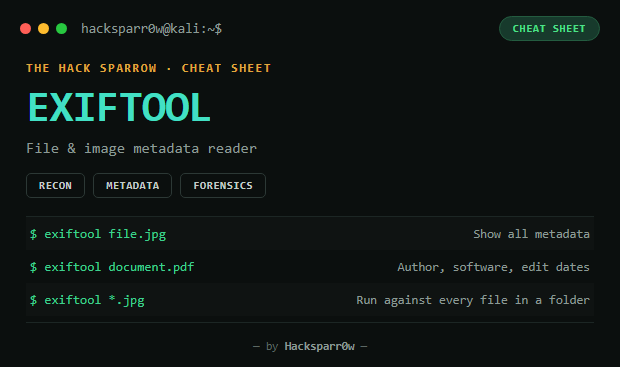
ExifTool reads and displays a file's metadata: in images, EXIF data like camera model, date, GPS coordinates; in documents (PDF, DOCX, PPTX), author, the software used to create it, edit dates. It's one of the first tools tried in OSINT and forensics challenges.
| Type | CLI |
| Platform | Kali / Linux (preinstalled) |
Basic usage
exiftool full_filename.jpgYou need to run it from the same directory as the file (or give the full path). It works with almost any format: images, PDFs, Office documents, audio and video.
What it often reveals
- GPS coordinates of a photo (geolocation)
- Camera/device model and editing software
- Author and organisation in office documents (the
Creatorfield) - Real creation/modification dates, different from what the filesystem shows
- Internal usernames leaked through the original save path
Responsible use
These commands are for systems you own or have explicit written authorisation to test (labs, CTFs, contracted engagements). Using them against third-party infrastructure without permission is illegal in most countries.
ExifTool lee y muestra los metadatos de un archivo: en imágenes, datos EXIF como cámara, fecha, coordenadas GPS; en documentos (PDF, DOCX, PPTX), autor, software usado para crearlo, fechas de edición. Es una de las primeras herramientas que se prueba en retos de OSINT y forense.
| Tipo | CLI |
| Plataforma | Kali / Linux (viene preinstalado) |
Uso básico
exiftool nombre_de_archivo.jpgHay que ejecutarlo en el mismo directorio que el archivo (o indicar la ruta completa). Funciona con casi cualquier formato: imágenes, PDFs, documentos de Office, audio y vídeo.
Qué suele revelar
- Coordenadas GPS de una foto (geolocalización)
- Modelo de cámara/dispositivo y software de edición
- Autor y organización en documentos ofimáticos (campo
Creator) - Fechas de creación/modificación reales, distintas a las mostradas por el sistema de ficheros
- Nombres de usuario internos filtrados en la ruta de guardado original
Uso responsable
Estos comandos son para entornos propios o con autorización explícita por escrito (laboratorios, CTF, auditorías contratadas). Usarlos contra infraestructura ajena sin permiso es ilegal en la mayoría de países.